
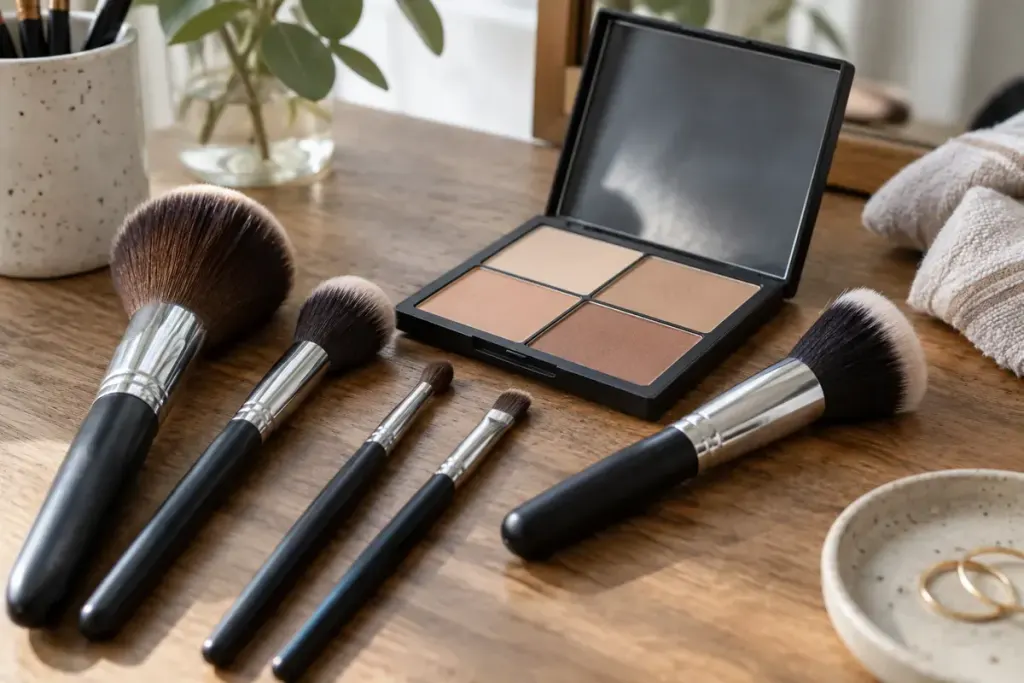
Powder blush looks neatly placed in the compact, then spreads across a much wider part of the cheek than intended. Before adding concealer to clean up the edge, change how you place the next small amount: less product and a smaller brush can make the boundary easier to manage.
Look at the working part of the brush rather than the length of the handle. A broad head touches more skin at once, while a smaller head can place product more locally. Density and flexibility also affect how the brush feels and distributes the formula.
Test with less product
Use a clean brush and a small amount of a suitable product. Apply it to the intended area, then inspect the edge in ordinary light. If the colour travels further than you want, a smaller tool or lighter loading may be more useful than trying to erase a large patch afterwards.
For a simple practice check, place one light touch inside the area where you want the colour. Blend its edge gently before reloading. If the first touch already covers the whole area, try a smaller brush rather than increasing pressure to force precision.
Let the formula influence the choice
Follow the product and brush manufacturer’s recommendations for powder, cream or liquid use. A tool that works well with one texture may drag or hold too much of another. Do not assume a fashionable brush shape is a universal replacement for the tools you already use.
Keep brushes clean, dry them appropriately and avoid sharing tools in ways that spread contamination. Stop using a product or tool that causes irritation and seek suitable advice if the problem persists.
A useful small collection covers your actual routine. Try changing the tool size and amount of product before adding more steps. The result you want is controlled placement with a comfortable technique, not a drawer full of brushes whose different names obscure the same everyday job.