
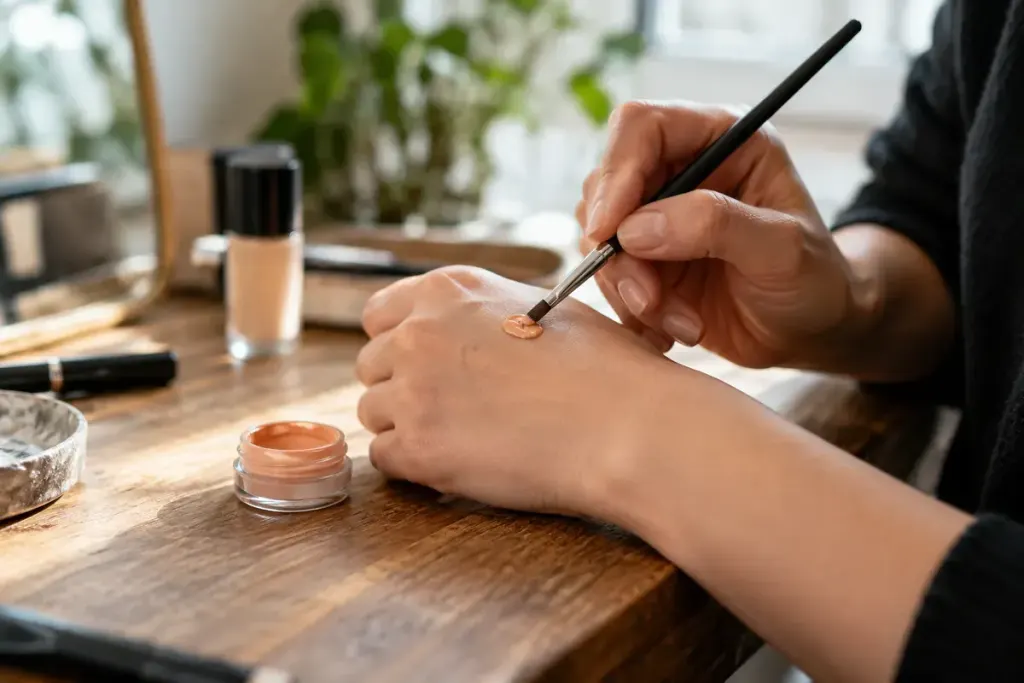
You apply corrector across a large area, add concealer, and find that the finished makeup looks heavier than expected. Sometimes the useful adjustment is not another product. It is a smaller area of application.
Colour corrector is intended to adjust the appearance of a particular colour through makeup. It does not need to cover every part of the face where concealer might eventually go.
Start with the colour you can actually see
Look in even, ordinary light before deciding where to place anything. The appearance may vary across a small area, so a broad triangle of product can extend well beyond the colour you meant to correct.
Brand shade descriptions can help, but they are not interchangeable formulas. For example, Bobbi Brown’s dark-circle guide distinguishes peach and bisque options within its own range. Skin tone, the colour being addressed and the product’s intensity all influence how a shade looks on a particular person.
Try a tiny amount in the intended location using a clean applicator. Use only products labelled as suitable for that area, particularly around the eyes. Keep them away from the eye itself and stop using a product if it causes irritation.
Compare one thin layer before adding another
Gently blend the edge while keeping most of the product where it is needed. Then inspect the result from a normal conversational distance. A magnifying mirror can encourage endless additions to details that are barely noticeable in ordinary viewing.
If you use concealer over it, add a small amount and check whether the corrector still shows through as an unwanted cast. More corrector may intensify that cast rather than solve it. A different shade or less product may be the more useful next test.
For a simple practice session, compare a carefully targeted application on one side with your usual method on the other. Keep the lighting, concealer and tools the same. Notice blend, texture and comfort after a little wear, not only immediately after application.
The aim is a finish you enjoy, with as little product as you need. Makeup guidance concerns appearance; a new or persistent skin change that worries you is a separate matter to discuss with an appropriate healthcare professional.