
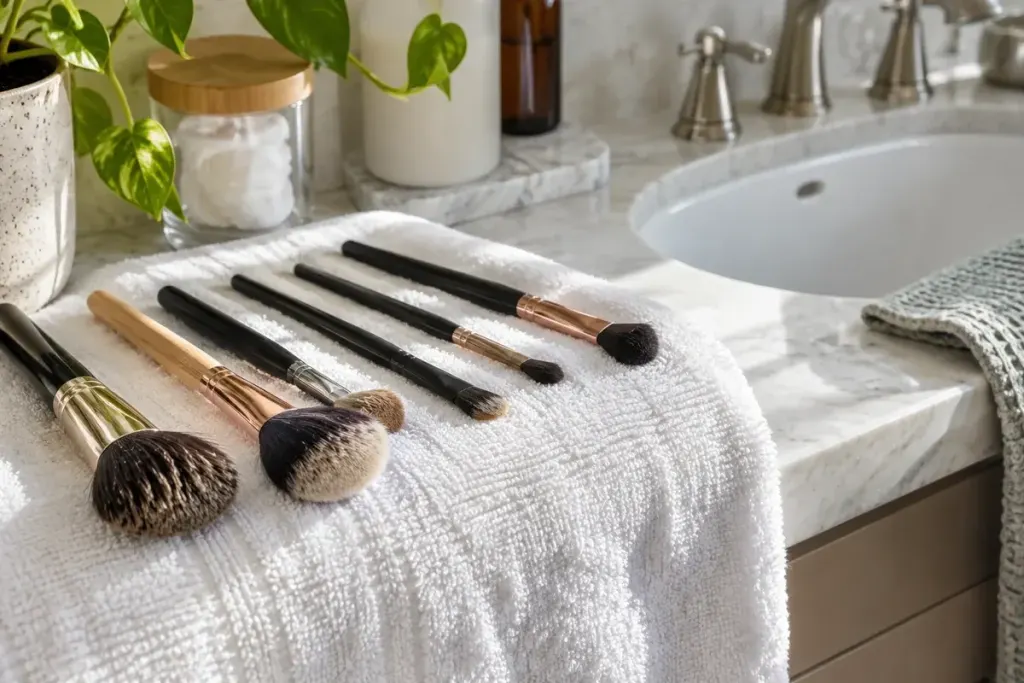
A freshly rinsed brush is not necessarily ready for tomorrow morning. Dense bristles can remain damp inside after the outside feels dry, and putting a wet brush upright can send water towards the handle. Make drying part of the cleaning plan rather than the step you squeeze in at the end.
The American Academy of Dermatology recommends washing makeup brushes every seven to ten days. Its guidance also explains why residue and contamination matter. Follow any additional instructions supplied with your particular tools.
Choose a time when the brushes can rest
Set aside the brushes you use daily and think about when you next need them. Cleaning them immediately before applying makeup creates an avoidable rush. A spare clean brush can help, but buying duplicates is not necessary if you plan the drying window.
Separate damaged tools from those that simply need washing. Loose bristles, a splitting handle or an unstable brush head may need a different decision. Cleaning does not repair a failing tool.
Clean the working end carefully
The AAD advises rinsing the tips with lukewarm water, using gentle shampoo or clarifying shampoo in a bowl, rinsing until the water runs clear, then removing excess moisture with a clean towel. Avoid submerging the entire brush head because prolonged water exposure can affect the glue connecting it to the handle.
Use gentle handling rather than twisting the bristles aggressively. Check the rinse water and the centre of a dense brush; a quick surface rinse can leave product behind. Do not substitute harsh household cleaners or unverified disinfectant mixtures.
Give water a way out
Lay brushes flat with their tips extending over the edge of a clean counter, as the AAD describes. Keep them somewhere they will not fall into a sink or be handled by children or pets. Do not stand wet brushes upright in a cup.
Let them dry fully before storage and use. The time varies with brush density and conditions, so a fixed overnight promise is unreliable. Avoid forcing the process with heat unless the manufacturer specifically permits it.
Make the routine easy to repeat
Keep the cleaning supplies together and attach the task to an existing weekly routine. A small note showing the last cleaning date is enough; you do not need an elaborate tracker.
Use your own brushes rather than sharing them, and keep the storage area clean. If you develop a persistent skin problem, brush cleaning is not a diagnosis or treatment. Speak with a qualified healthcare professional. The practical objective here is simpler: tools that are clean, dry and in good condition when they touch your skin.
Another practical question: Trying a New Skin-Care Product? Change One Thing at a Time.