
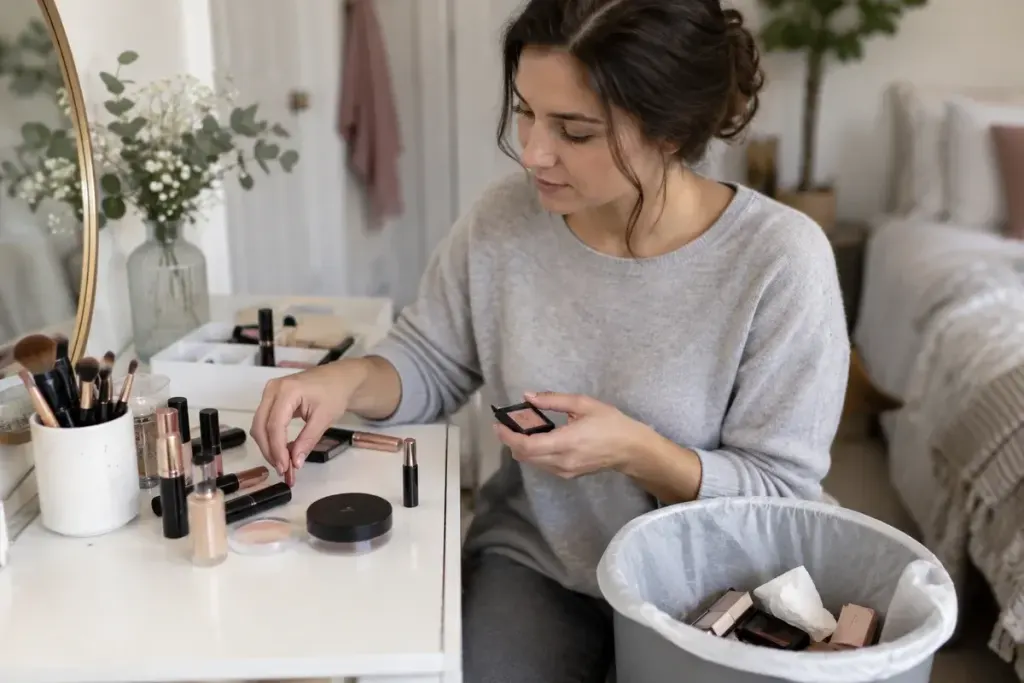
The foundation was opened only recently, but it spent the summer in a hot car. The mascara looks unchanged, but nobody remembers when it was first used. An opening date is helpful; it is not the whole story of a cosmetic product.
A small cupboard review can combine the manufacturer’s instructions with what has happened to the product since you bought it.
Keep the label with the product
Follow any stated expiry date, period-after-opening symbol and storage instructions. These details are easier to use when the packaging remains readable. Marking an opening date can help, especially for products used only occasionally.
The FDA’s explanation of cosmetic shelf life notes that storage and use can affect a product’s condition. Labelling rules also differ between jurisdictions and product types, so do not assume every cosmetic carries the same kind of date.
Consider the storage history
Keep products as directed, close lids properly and avoid unnecessary heat or moisture. A bathroom shelf or handbag may expose an item to conditions different from those assumed in ordinary storage guidance.
If you decant a product, you may lose useful labelling and introduce another hygiene question. Do not add water or other ingredients to revive a product that has dried out unless the manufacturer specifically instructs that use.
Notice changes without relying on appearance alone
An unexpected change in smell, colour, texture or separation is a reason to stop and check the manufacturer’s advice. A normal appearance, however, does not prove that an old or poorly stored product remains suitable.
Eye-area products deserve particular care. Avoid sharing personal cosmetics and keep applicators clean according to their instructions. If a product causes irritation or another concerning reaction, stop using it and seek appropriate medical advice rather than testing it repeatedly to see whether the reaction returns.
Make a smaller collection easier to manage
Arrange products so that opened items are visible and unopened duplicates do not disappear at the back. A simple note with the opening date and label instructions is more useful than a universal internet chart claiming every product lasts the same number of months.
When an item has to go, follow local disposal guidance for its contents and packaging. The aim is a collection you can use confidently and look after properly. Buying less of a product you rarely finish may be a better beauty habit than repeatedly rescuing forgotten jars.