
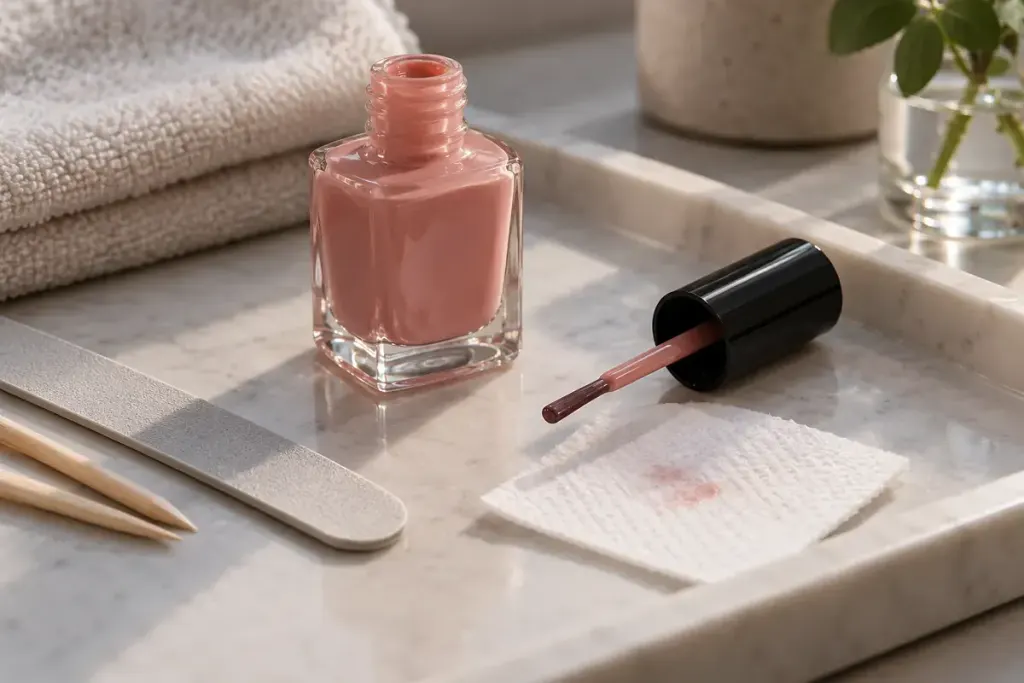
The manicure is finished, but a ridge of dried colour remains around the bottle opening. Screwing the cap over it may feel like closing the bottle properly when the closure is actually obstructed. The bottle neck deserves a quick check before everything goes back in the drawer.
In its product-care guidance, essie recommends keeping the neck clean and closing bottles tightly to limit drying through air exposure. Its instructions describe cleaning residue with nail-polish remover and a lint-free pad. Follow the guidance for your own product, because packaging and formulas can differ.
Clean the closure, not the formula
Work on a protected surface, away from heat and flames, and follow the ventilation and handling directions on the products. Keep cleaning liquid and loose fibres out of the bottle. Cleaning the outside neck is a separate task from changing the polish inside.
Do not pour remover into thickened polish as an improvised repair. If the formula has changed, consult the manufacturer’s advice about suitability and disposal rather than assuming that making it thinner makes it usable again.
Notice how the cap seats
After the neck is clean, check that the cap sits straight and closes normally. Avoid forcing a stuck cap with tools or heating the glass bottle. A cracked bottle, damaged closure or persistent leak needs a different response from an untidy rim.
Store the bottle upright in a suitable place according to its label, beyond the reach of children. Keep the original label readable so you can identify the product and its care information later.
Add the check to your normal tidy-up
Place the cleaning pad with the other manicure supplies so the task happens before polish dries around the closure. A brief check after use is easier to remember than a large clean-out months later. It also gives you a chance to spot damaged packaging before it stains a bag or drawer.