
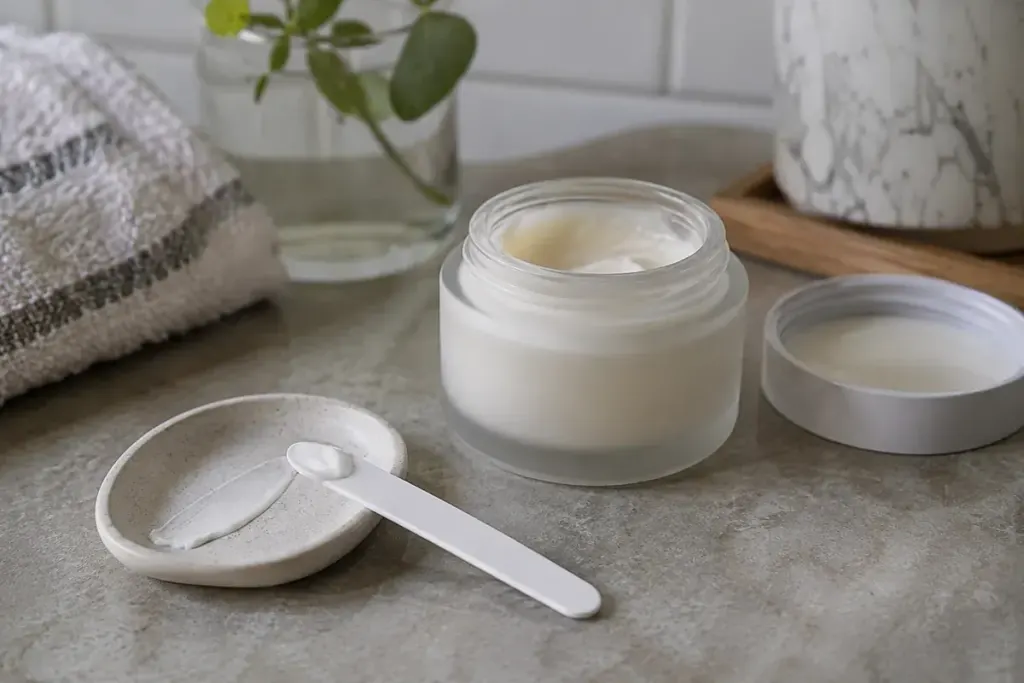
A small amount of cream makeup on a clean palette can be convenient when combining shades for one application. The habit only helps if the original container stays separate from tools and product that have already touched the face.
The FDA’s cosmetics safety guidance recommends washing hands, following product directions, keeping containers clean and closed, and not sharing makeup. Those basics matter more than whether the palette looks professional.
Prepare a small, clean working area
Use a clean, dry palette and a suitable clean spatula where the product’s instructions allow it. Remove a modest amount, close the original container, and work from the separated portion. If a tool has touched your skin, do not put it back into the jar without appropriate cleaning.
Keep the amount small enough for the immediate application. Returning leftovers to the original container carries everything that contacted them back into the larger supply. Do not add water or other ingredients to revive a product unless the manufacturer specifically instructs it.
A travel pot is a different decision
Moving a product into another container for storage raises extra questions about packaging, stability, cleanliness, and identifying the product later. An airless pump or specialised package may be part of how the formula is protected. Check manufacturer guidance rather than assuming every product can be decanted.
Keep the ingredient list, opening date, and relevant warnings accessible. A plain pot with no label makes it harder to know what it contains or whether it remains appropriate to use.
If colour, smell, or texture changes unexpectedly, stop using the product and follow suitable advice. A clean-looking palette cannot make a spoiled product safe again. For everyday application, the useful routine is straightforward: clean preparation, a small separate portion, and no return journey from used makeup to the original jar.