
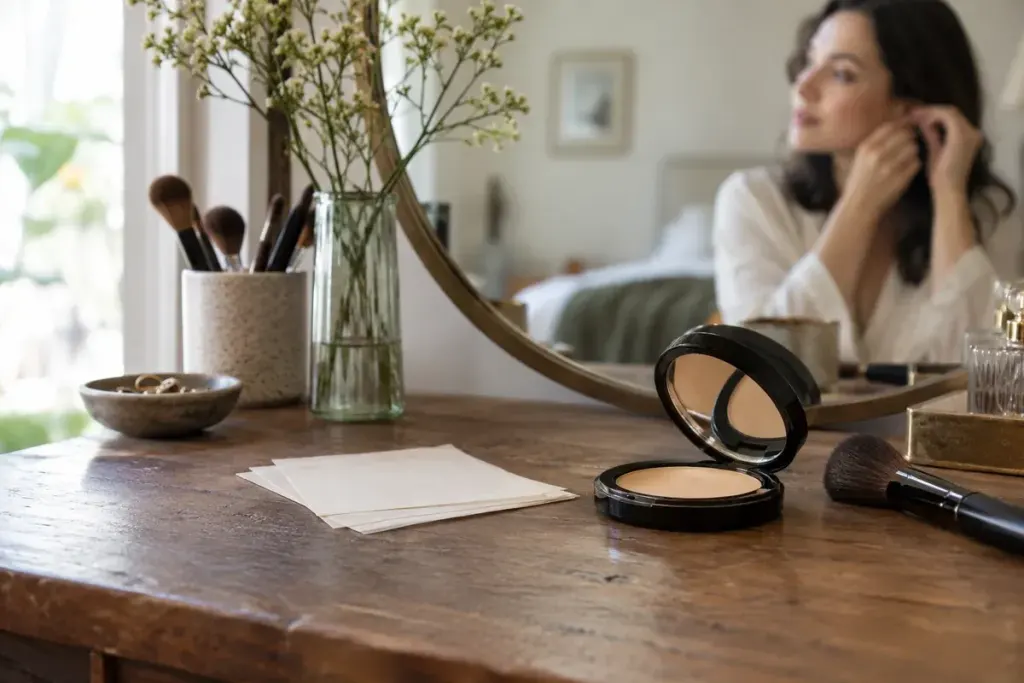
By mid-afternoon, one part of your makeup looks shiny while another already looks dry. Brushing powder over everything treats two different observations as though they were the same problem.
Blotting paper is used to lift some surface oil; powder adds product that can change shine, texture and finish. Neither is automatically the right response everywhere. Start with the area that actually bothers you and leave the rest alone.
Make a small touch-up
With clean hands, gently press a fresh suitable blotting sheet against the shiny area rather than rubbing it across the makeup. Check the result in ordinary light. If you still want a more matte finish, apply a small amount of your usual suitable powder where needed.
Do not assume that more powder will correct every change in foundation. Separation, flaking or product collecting around a crease may need a different approach. Adding layers can make the original texture harder to assess.
Judge it where you will be seen
A close-up mirror under harsh lighting can encourage an unnecessarily heavy correction. Step back and check the overall appearance. If photographs matter, test the actual product and lighting beforehand rather than assuming a finish will look identical on camera.
Keep applicators clean and avoid sharing products or tools that contact the skin. Follow product instructions and stop using anything that causes irritation. Persistent skin changes deserve appropriate professional advice rather than increasingly elaborate cosmetic cover.
For a useful personal comparison, note which area needed attention and what you used. You may find that a light, local touch-up preserves the rest of the makeup better than starting a second full application. The aim is the finish you enjoy, not removing every trace of natural skin texture.