
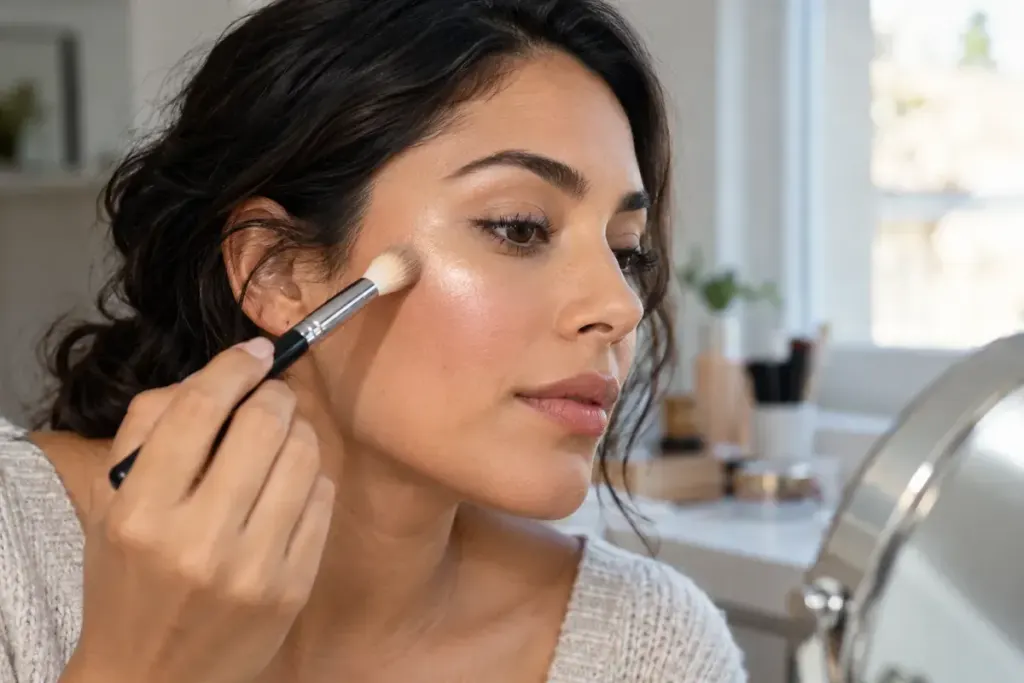
A highlighter can look almost invisible in one mirror position and very bright when you turn your head. Adding another layer before checking the angle can produce more shine than you intended.
MAC’s powder guide distinguishes finishing effects and describes highlighting the face’s high points. Product guidance is specific to its formulas. The small comparison exercise below is about judging your own application, not promising the same finish from every powder, cream, or liquid.
Move the face, then move the mirror
Apply a small amount according to the product directions and check it while looking ahead, then turning gently to either side. Use ordinary room light and, where available, indirect daylight. A strong light aimed straight at the mirror can hide how the effect appears from another position.
Try one cheek first if you want a clear comparison. Notice whether you are seeing a soft reflection, visible particles, or a distinct edge. Those observations tell you more than deciding that the product is simply “not bright enough.”
Build gradually and keep the intended occasion in mind. Makeup for a close conversation in daylight may be judged differently from makeup for a deliberately lit photograph. A phone camera can add exposure and processing changes, so do not treat one selfie as an exact measurement of the finish.
Use clean tools and follow any placement restrictions, particularly around the eyes. Stop using a product that causes irritation. There is no need to put highlighter on every suggested area if a smaller placement gives the effect you want.
For next time, note the product, amount, and lighting that made the result easy to judge. The aim is a controlled choice about reflection, not an endless cycle of adding product because the first viewing angle concealed it.