
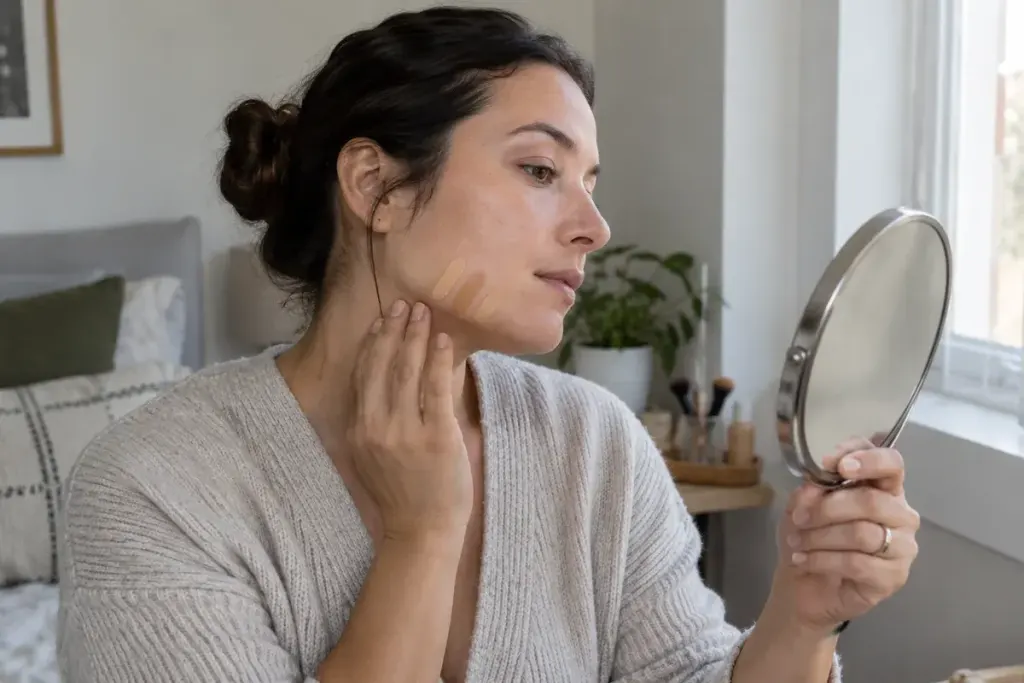
A foundation looks convincing under a shop’s bright lights. At home, the jawline appears noticeably different from the neck. The product did not necessarily change on the journey; the conditions used to judge it did.
Shade matching is easier when you compare a few candidates under consistent conditions. The aim is to see how the product works on your skin in the situations where you will actually wear it.
Choose a useful comparison area
Follow the retailer’s hygienic sampling process and avoid applying shared testers directly to your skin. Compare a small number of shades around an appropriate jawline area rather than treating the back of your hand as a guaranteed match for your face.
L’Oréal Paris’s shade-matching guide discusses how lighting affects the appearance of undertone and recommends natural light. It is manufacturer guidance with a commercial context; the observation is useful without requiring you to choose that brand.
Keep the preparation the same
Use comparable amounts over your normal, compatible skincare routine. Testing one shade over a rich cream and another on bare, dry skin mixes colour comparison with finish and preparation differences.
Let the samples settle according to the product’s directions before deciding. Check in indirect daylight and ordinary indoor light rather than only under a strong spotlight. A phone photograph can help you remember the candidates, but automatic colour processing makes it a poor final judge.
Look at more than the first colour impression
Notice coverage, texture and whether the finish remains comfortable. A near-perfect shade in a formula you dislike may be less useful than continuing the search. Avoid piling on extra product solely to force the colour to match.
For a practical comparison, note the product, shade name, preparation and observation time. “Second sample looked best beside the neck in window light” is easier to use later than remembering which bottle was on the left.
Allow the match to be seasonal
Skin appearance and your preferred coverage can change. Recheck before automatically replacing an old shade, particularly after a long gap. Stop using a product that causes irritation and seek appropriate advice for persistent reactions.
A useful match is not won by the most flattering shop mirror. It is the one that still makes sense after you leave the counter, see it in ordinary light and wear it as part of your actual routine.