
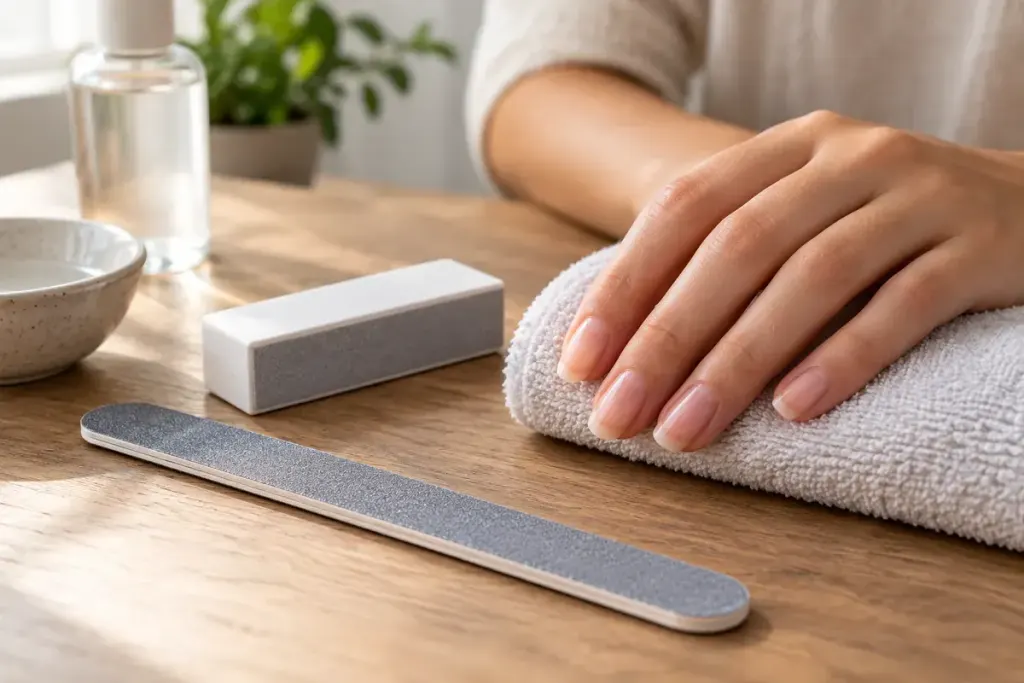
A nail file and a buffer may both feel abrasive, but the task matters as much as the tool’s name. Shaping the free edge changes the outline. Buffing the nail plate works on the surface and removes material there.
Some fine tools can perform more than one finishing job. The distinction is therefore not an absolute rule about which object may touch which area; it is a reminder to know what you are trying to change.
OPI’s nail-shaping guide separates shaping from finer finishing and asks the user to inspect the result from different angles. Product systems for artificial enhancements may specify abrasives that are not suitable for an untreated natural nail.
Start with the edge you can see
Choose a tool intended for natural nails and use controlled, light strokes according to its instructions. Check the outline regularly instead of filing until both sides merely feel symmetrical. A snag at the free edge may need a small adjustment, not a complete change of shape.
Keep the skin around the nail out of the abrasive path. Stop if the process causes pain, heat or soreness. A tool that removes material quickly is not automatically a better choice.
For the surface, be conservative. Ridges are not an instruction to keep buffing until the nail looks perfectly flat. Repeated abrasion can leave the plate thinner, and a shiny finish does not establish that the nail is healthy.
If you are following a polish or enhancement system, use its preparation method and seek trained help when needed. Do not transfer a tutorial’s coarse grit or electric-file technique to bare natural nails simply because the finished photograph looks similar.
Clean reusable tools as directed and avoid sharing items that cannot be appropriately cleaned. Replace worn or damaged abrasives rather than pressing harder to compensate.
New, persistent changes in nail colour, thickness, attachment or surrounding skin deserve advice from a healthcare professional, especially with pain or inflammation. Cosmetic filing should not be used to conceal a problem that needs assessment.
A tidy manicure can come from a few deliberate touches. The aim is a comfortable, smooth edge and suitable care, not removing every natural variation from the nail.